
Chattahoochee County Property Tax Assessment Lookup
Chattahoochee County property tax records are public records maintained by the county government in Cusseta, the county seat. Located in western Georgia along the Alabama border, this rural county serves a population of approximately 9,000 residents. Property owners and researchers can access assessment records, tax bills, and parcel information through the county's online property search system. The Board of Tax Assessors determines property values for taxation purposes, while the Tax Commissioner handles billing and collections for all real and personal property within Chattahoochee County.
Chattahoochee County Property Tax Quick Facts
Chattahoochee County Property Search Options
Chattahoochee County offers property tax record searches through QPublic.net, a third-party service that hosts assessment data for many Georgia counties. This online portal allows property owners, real estate professionals, and researchers to access current assessment information without visiting the courthouse. The system is available 24 hours a day and provides immediate access to parcel data, ownership records, and valuation details.
The QPublic search system for Chattahoochee County lets you look up properties by owner name, parcel number, or physical address. Search results display the current assessed value, property characteristics, sales history, and tax district information. The site also offers map-based searching capabilities that show the geographic location of parcels within the county. Access the Chattahoochee County property search at qpublic.net/ga/chattahoochee/.
For residents who prefer in-person assistance, the Chattahoochee County Courthouse in Cusseta houses both the Tax Assessor and Tax Commissioner offices. Staff members can help you locate property records and explain assessment procedures. The courthouse maintains physical copies of property records and maps that may not be available through the online system.
Property tax bills in Chattahoochee County are typically mailed in the fall, with payment due by December 20th. Property owners can pay online, by mail, or in person at the Tax Commissioner's office. Late payments accrue interest and penalties according to Georgia state law.
Chattahoochee County Tax Assessor Office Information
The Chattahoochee County Board of Tax Assessors is responsible for determining the fair market value of all real and personal property in the county. Under Georgia law, properties are assessed at 40% of their fair market value. The assessor's office reviews property characteristics, market trends, and sales data to establish accurate valuations each year.
The Tax Assessor's office is located within the Chattahoochee County Courthouse in Cusseta. This single consolidated government building houses most county administrative functions, making it convenient for property owners to handle multiple tasks in one visit. The staff provides assistance with assessment questions, exemption applications, and appeal procedures.
| Office Location |
Chattahoochee County Board of Tax Assessors 377 Broad Street Cusseta, GA 31805 Phone: (229) 989-3487 |
|---|---|
| Chief Appraiser | Contact office for current Chief Appraiser information |
| Hours | Monday - Friday, 8:00 a.m. - 5:00 p.m. |
| Website | qpublic.net/ga/chattahoochee/ |
Assessment notices are mailed to property owners each spring, typically in April or May. These notices indicate the assessed value for the upcoming tax year and inform owners of their right to appeal. Property owners should review these notices carefully to ensure the assessed value accurately reflects their property's worth.
The Board of Tax Assessors maintains records for all residential, commercial, agricultural, and industrial properties in Chattahoochee County. This includes the unincorporated areas of the county as well as any properties within municipal boundaries. Mobile homes, timberland, and conservation use properties are also assessed by this office.
Chattahoochee County Tax Commissioner Information
The Chattahoochee County Tax Commissioner is responsible for billing and collecting property taxes. This office receives the assessed values from the Board of Tax Assessors, calculates tax bills based on the millage rates set by local governing authorities, and processes payments from property owners.
Tax bills are generated annually and mailed to the owner of record as of January 1st. The Tax Commissioner's office accepts various payment methods including cash, check, money order, and credit/debit cards (with processing fees for card payments). Many property owners choose to pay online for convenience.
| Office Location |
Chattahoochee County Tax Commissioner 377 Broad Street Cusseta, GA 31805 Phone: (229) 989-3461 |
|---|---|
| Mailing Address |
P.O. Box 70 Cusseta, GA 31805 |
| Hours | Monday - Friday, 8:00 a.m. - 5:00 p.m. |
| Website | chattahoocheecountyga.us/departments/tax-commissioner/ |
Property taxes in Chattahoochee County support various local services including public schools, road maintenance, emergency services, and county government operations. The millage rate is set annually by the County Commission, Board of Education, and any applicable municipal governments.
Unpaid property taxes become delinquent after the due date, and interest begins to accrue. The Tax Commissioner may initiate tax lien or tax sale proceedings for seriously delinquent accounts. Property owners facing financial hardship should contact the Tax Commissioner's office to discuss payment plan options.
How to Appeal Property Assessments in Chattahoochee County
Georgia law provides property owners the right to appeal their assessments if they believe the value is incorrect. In Chattahoochee County, appeals must be filed within 45 days of the date the assessment notice was mailed. This deadline is strictly enforced, so property owners should act promptly upon receiving their notice.
To initiate an appeal, property owners must file a written appeal with the Chattahoochee County Board of Tax Assessors. The appeal should include the property owner's name, the parcel number, the current assessed value, and the grounds for the appeal. Common grounds for appeal include:
- The assessed value exceeds the fair market value of the property
- The property is not assessed uniformly with similar properties
- The property classification is incorrect
- There are factual errors in the property description
Supporting documentation strengthens an appeal. This may include recent appraisals, sales of comparable properties, photographs showing property conditions, or evidence of structural issues. The Board of Tax Assessors will review the appeal and may schedule a hearing or conduct an informal review.
If the property owner is not satisfied with the Board's decision, the appeal can proceed to the County Board of Equalization, a panel of appointed citizens who hear assessment disputes. Further appeal options include binding arbitration or superior court review. Visit the Georgia Department of Revenue website at dor.georgia.gov/property-taxpayers-bill-rights for detailed information about taxpayer rights and appeal procedures.
Chattahoochee County Homestead Exemptions
Homestead exemptions reduce the taxable value of a primary residence, resulting in lower property taxes for qualifying homeowners. Chattahoochee County property owners may be eligible for both state and local homestead exemptions.
To qualify for a homestead exemption, the property must be owned and occupied as the primary residence as of January 1st of the tax year. The property owner must be a legal resident of Georgia. Only one homestead exemption is allowed per household, and the exemption applies only to the primary residence.
The standard state homestead exemption reduces the assessed value by $2,000. Additional exemptions are available for:
- Senior citizens aged 65 and older: May qualify for additional exemptions based on income
- Disabled veterans: Eligible for significant property tax relief based on disability rating
- Surviving spouses of military members: Special exemptions available
- Disabled residents: Additional exemptions for those with qualifying disabilities
Applications for homestead exemptions must be filed with the Tax Assessor's office by April 1st. Once approved, most exemptions automatically renew each year. However, property owners must notify the assessor's office of any changes that might affect eligibility, such as moving to a new primary residence.
Property owners should contact the Chattahoochee County Tax Assessor's office to learn about all available exemptions and to obtain application forms. Staff can help determine which exemptions apply to specific situations and explain the required documentation.
Georgia Department of Revenue Property Tax Resources
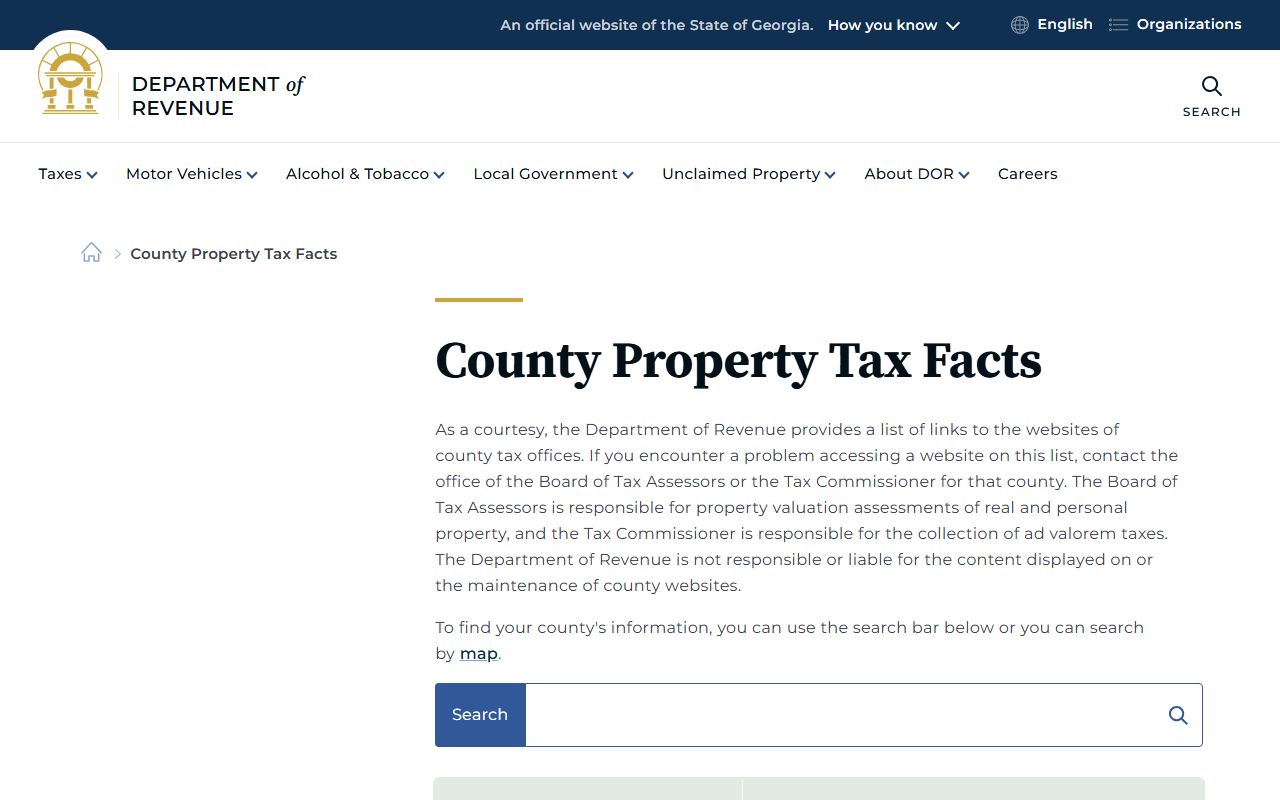
The Georgia Department of Revenue (DOR) provides statewide oversight of property tax administration and offers resources for taxpayers in all counties, including Chattahoochee County. The DOR website contains valuable information about property tax laws, taxpayer rights, and assessment procedures.
Property owners in Chattahoochee County can visit the Georgia DOR website to access:
- County-by-county property tax facts and statistics
- Information about the Taxpayer Bill of Rights
- Forms and publications related to property taxation
- Contact information for regional DOR offices
Key Georgia DOR resources for Chattahoochee County property owners include:
The Georgia DOR also oversees the administration of conservation use assessments, which provide favorable tax treatment for qualified agricultural and forestry properties. Landowners in Chattahoochee County with significant acreage used for bona fide agricultural or timber purposes may benefit from these programs.
Nearby Counties
Chattahoochee County is bordered by several other Georgia counties and the Alabama state line. Property owners researching land in the region may need to access records from these neighboring jurisdictions. Each county maintains its own property tax records through separate assessor and commissioner offices.