
Search Georgia Property Tax Records
Georgia property tax records are public documents that show the assessed value, ownership, and tax status of real and personal property across all 159 counties. Each county maintains its own tax records through the Board of Tax Assessors and the Tax Commissioner. You can search these records online, by phone, or in person at county tax offices throughout Georgia.
Georgia Property Tax Records Quick Facts
Where to Find Georgia Property Tax Records
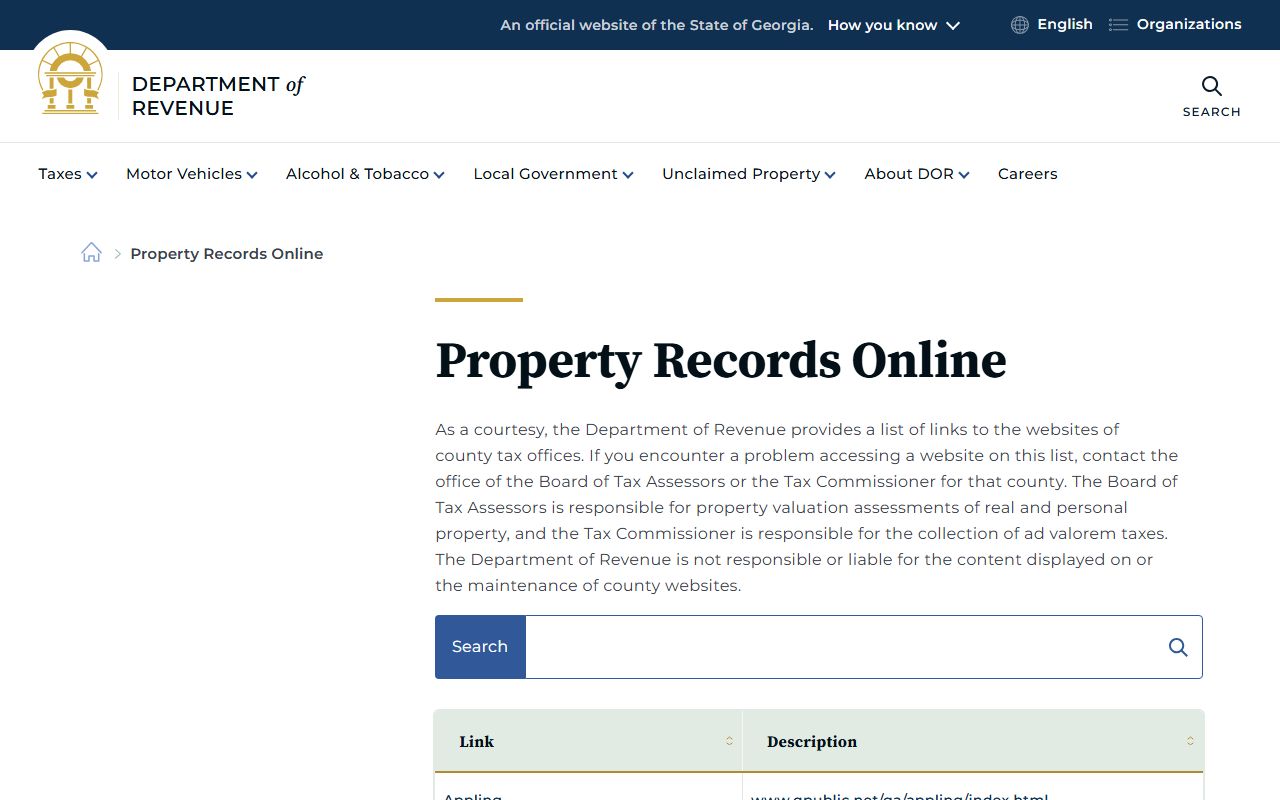
The Georgia Department of Revenue maintains a master list of all county tax office websites through its Property Records Online Portal. This portal provides direct links to every county's tax assessor and tax commissioner websites. The Board of Tax Assessors in each county handles property valuations, while the Tax Commissioner manages tax collections.
Most Georgia counties use qpublic.net for online property searches. Some larger counties like Fulton, Cobb, DeKalb, and Gwinnett have custom property search systems. You can search by owner name, property address, or parcel ID to find assessment values, tax bills, and property maps.
Note: Contact your county tax office directly for the most current property tax information.
How to Search Property Tax Records in Georgia
Georgia offers several ways to look up property tax records. Online access is available through county websites and third-party platforms. You can search from home at any time. In-person visits work well when you need certified copies or want to speak with staff.
Many counties offer online property search through qpublic.net. You can search by name, address, or parcel number. The results show assessed values, property details, and tax payment status. This is a fast way to find property records from home.
To search property records online, you typically need one of the following:
- Property owner's full name
- Street address of the property
- Parcel ID or tax map number
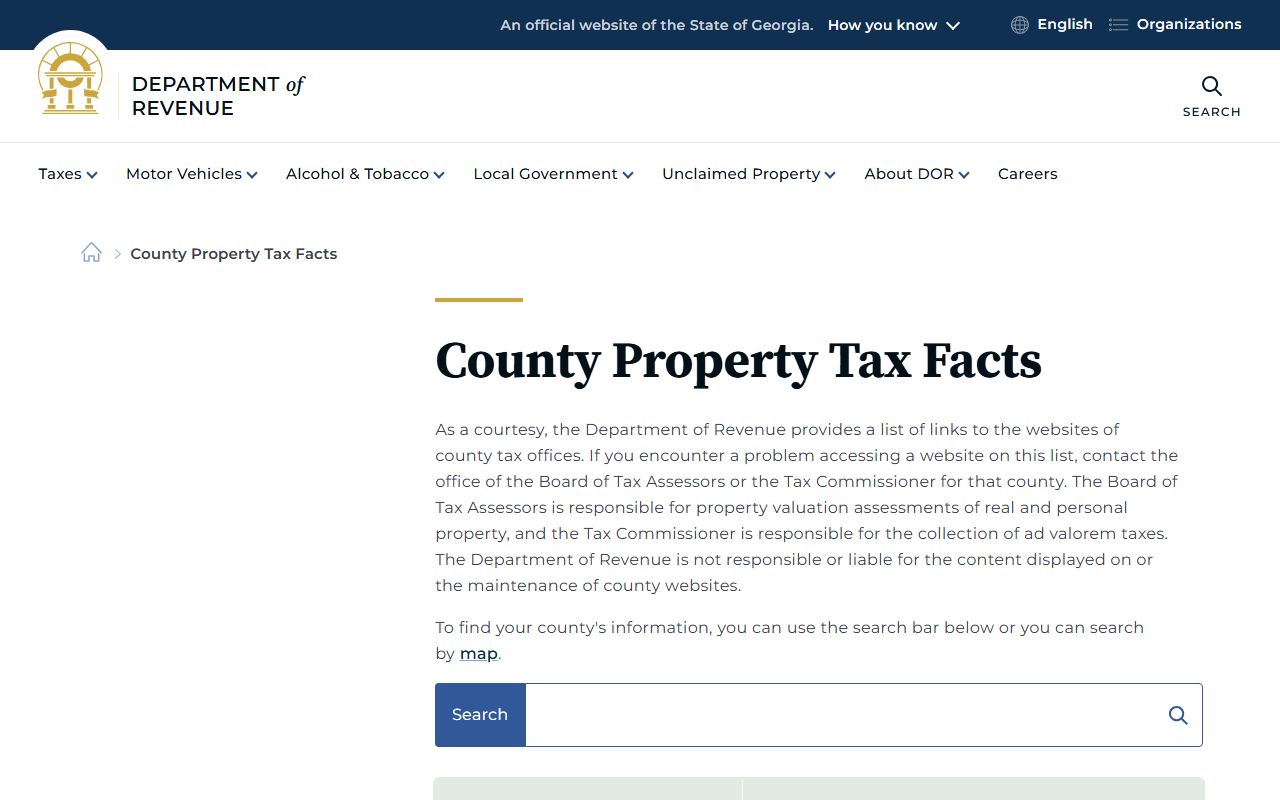
You can also search in person at your county tax assessor's office. Staff can help you find records and answer questions. Most offices have public access computers. The Georgia Department of Revenue provides contact information for all county tax offices at dor.georgia.gov/county-property-tax-facts.
Understanding Georgia Property Tax Assessments
Georgia law requires property to be assessed at 40% of its fair market value. Fair market value means the amount a knowledgeable buyer would pay and a willing seller would accept. The assessed value is then multiplied by the millage rate to calculate taxes owed.
The Board of Tax Assessors mails annual assessment notices typically in May. You have 45 days from the mailing date to file an appeal if you disagree with your assessment. Appeals can be based on value, taxability, uniformity, or denial of an exemption.
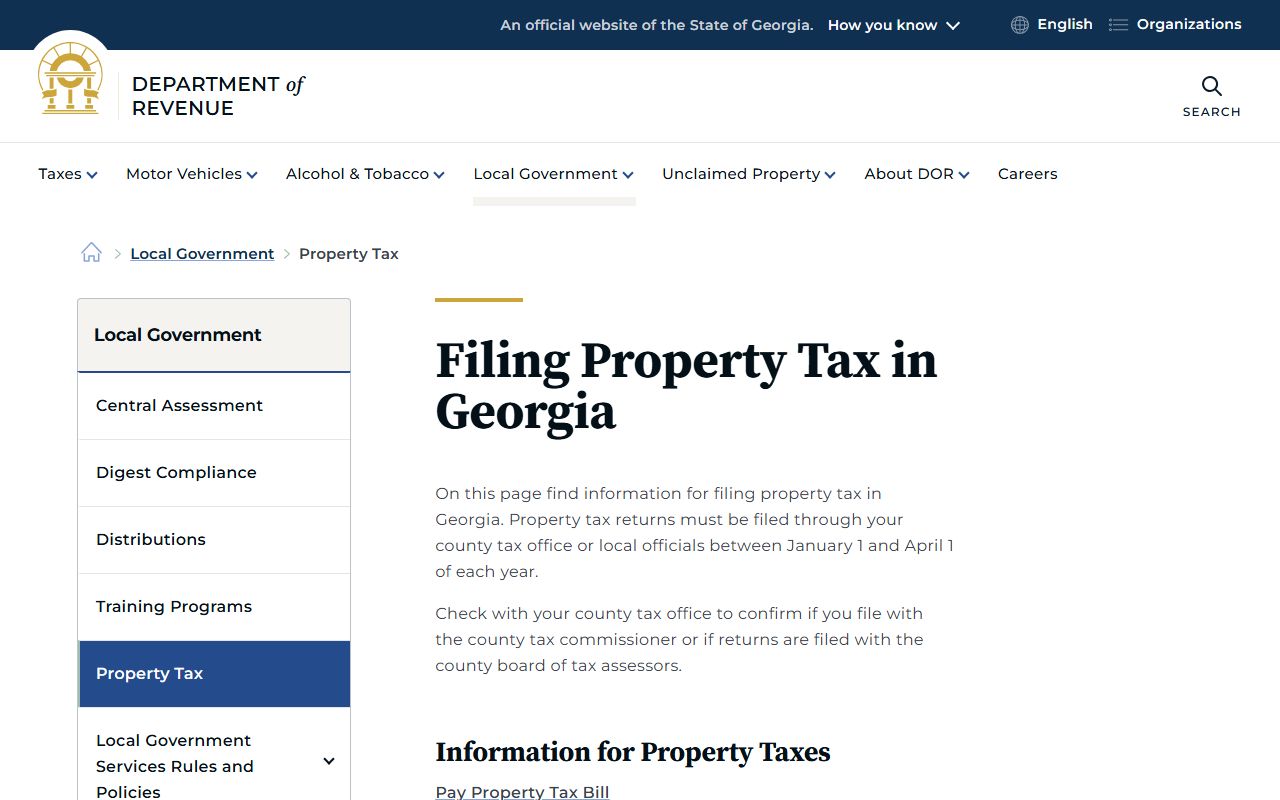
Property tax returns must be filed between January 1 and April 1 each year. Returns are filed with either the county tax commissioner or the board of tax assessors. Check with your county to confirm the correct office.
Georgia Property Taxpayer Rights and Appeals
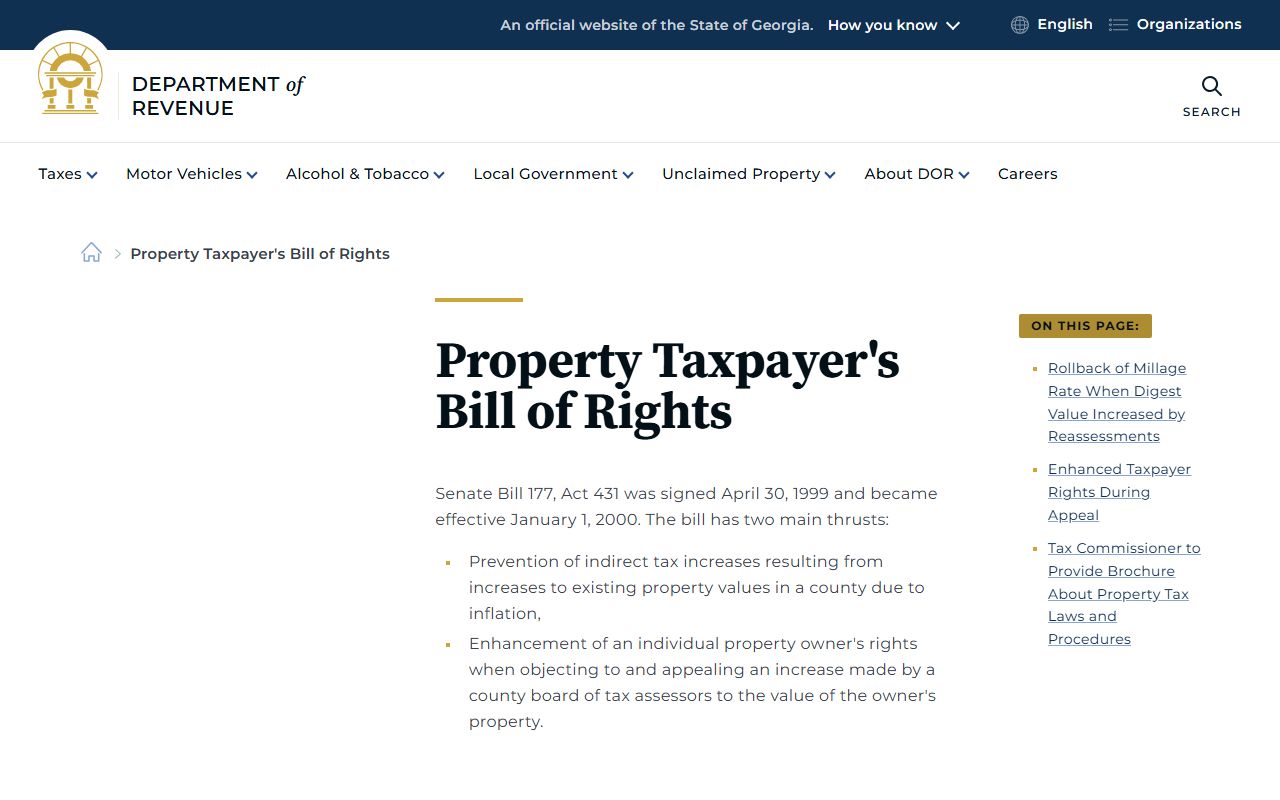
Georgia's Property Taxpayer's Bill of Rights, established by Senate Bill 177 in 1999, protects property owners during the assessment and appeal process. These enhanced rights ensure fairness and transparency in property tax administration.
When the board of tax assessors changes your property value, they must provide a simple explanation if the increase exceeds 15%. Assessment notices must include contact information for a knowledgeable person who can answer questions. Property owners have the right to record conversations with assessors regarding their assessment or appeal.
If your appeal results in a final value that is 85% or less of the original assessment, you may recover costs and reasonable attorney fees. Three appeal options exist: County Board of Equalization, Hearing Officer, or Arbitrator.
Note: The 45-day appeal period is strict. Missing the deadline means waiting until the next tax year to challenge your assessment.
Georgia Homestead Exemptions
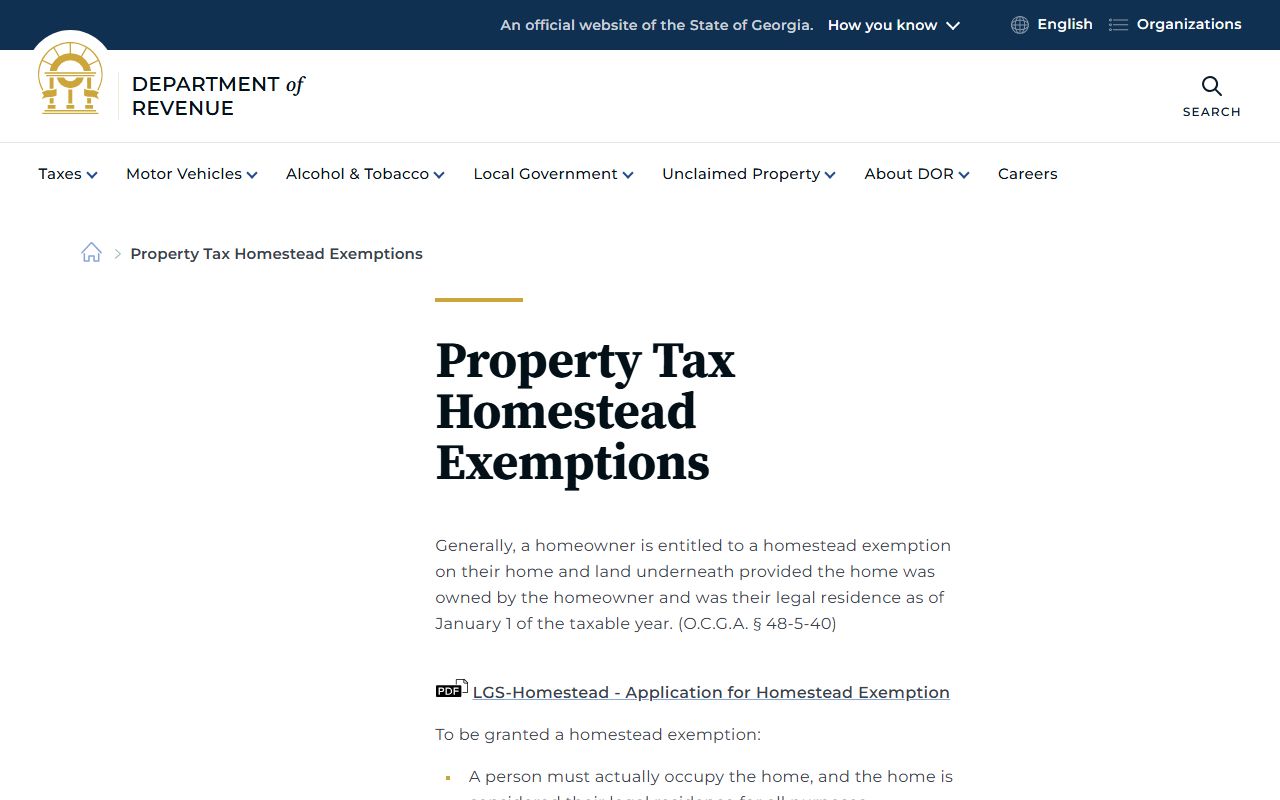
Georgia offers homestead exemptions to property owners who occupy their home as a primary residence. The standard state exemption provides $2,000 off the assessed value. Many counties offer additional local exemptions that can be more beneficial.
To qualify, you must own and occupy the property as your primary residence as of January 1 of the tax year. Applications are filed with the county tax commissioner or tax assessor. The deadline to apply is April 1. Once granted, most exemptions continue automatically each year.
Gwinnett County offers a Value Offset Exemption that holds the taxable value constant for the county portion of your bill. This can provide significant savings as property values increase. Contact your county tax office to learn about all available exemptions.
Georgia Property Tax Deadlines and Payments
Property taxes in Georgia follow a yearly cycle with several key dates. Property tax returns are due between January 1 and April 1. Assessment notices are typically mailed in May. Tax bills are usually due December 20, though some counties may have different due dates.
Taxpayers have 60 days from the postmark date on their tax bill to pay before interest begins to accrue. Many counties offer online payment options through credit card, debit card, or e-check. Some also accept payments by phone or mail.
Delinquent taxes accrue interest and penalties. Some counties sell tax liens on delinquent properties. Contact your county tax commissioner to discuss payment plan options if you cannot pay in full by the due date.
Georgia Property Tax Records FAQ
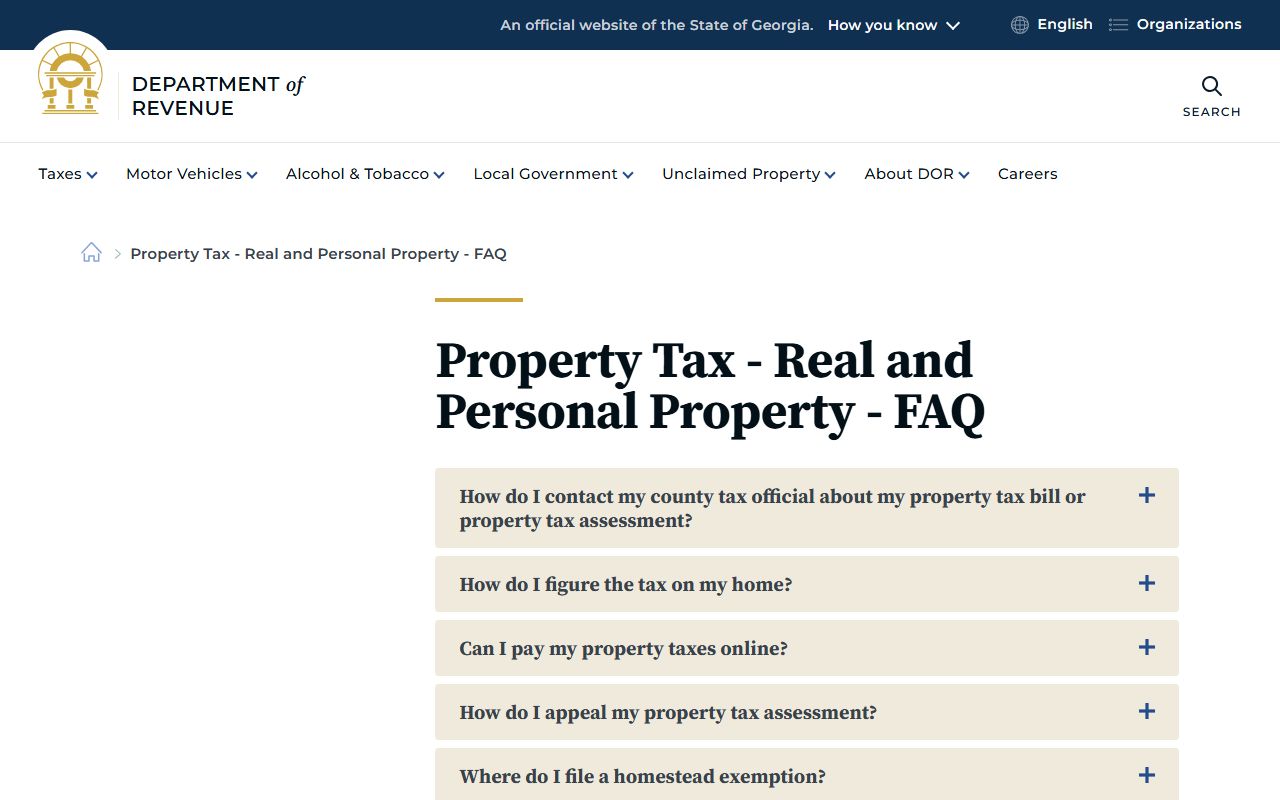
Property owners often have questions about their assessments and tax bills. The Georgia Department of Revenue maintains a comprehensive FAQ page at dor.georgia.gov/property-tax-real-and-personal-property-faq that addresses common concerns.
For questions about paying your tax bill, filing for homestead exemptions, or registering motor vehicles, contact your county tax commissioner's office. For questions about property values, assessments, or filing appeals, contact your county board of tax assessors.
You can also contact the Georgia Department of Revenue Local Government Services Division at (404) 724-7000 for general property tax questions or visit dor.georgia.gov/taxes/how-do-i-contact-taxpayer-services for taxpayer services.
Note: Each county sets its own millage rates and may offer different local exemptions.
Historical Georgia Tax Records
The Georgia Archives maintains historical tax records dating back to 1872. Each county was required by state law to file a copy of its tax digest with the Comptroller General, now the Department of Revenue. These records have been transferred to the Georgia Archives.
Tax digests from 1870 through 1890 have been scanned and indexed on Ancestry.com. Tax records list taxpayers in rough alphabetical order within each tax district. From 1867 forward, taxes for African Americans or Freedmen are listed either at the end of each militia district or at the end of the digest.
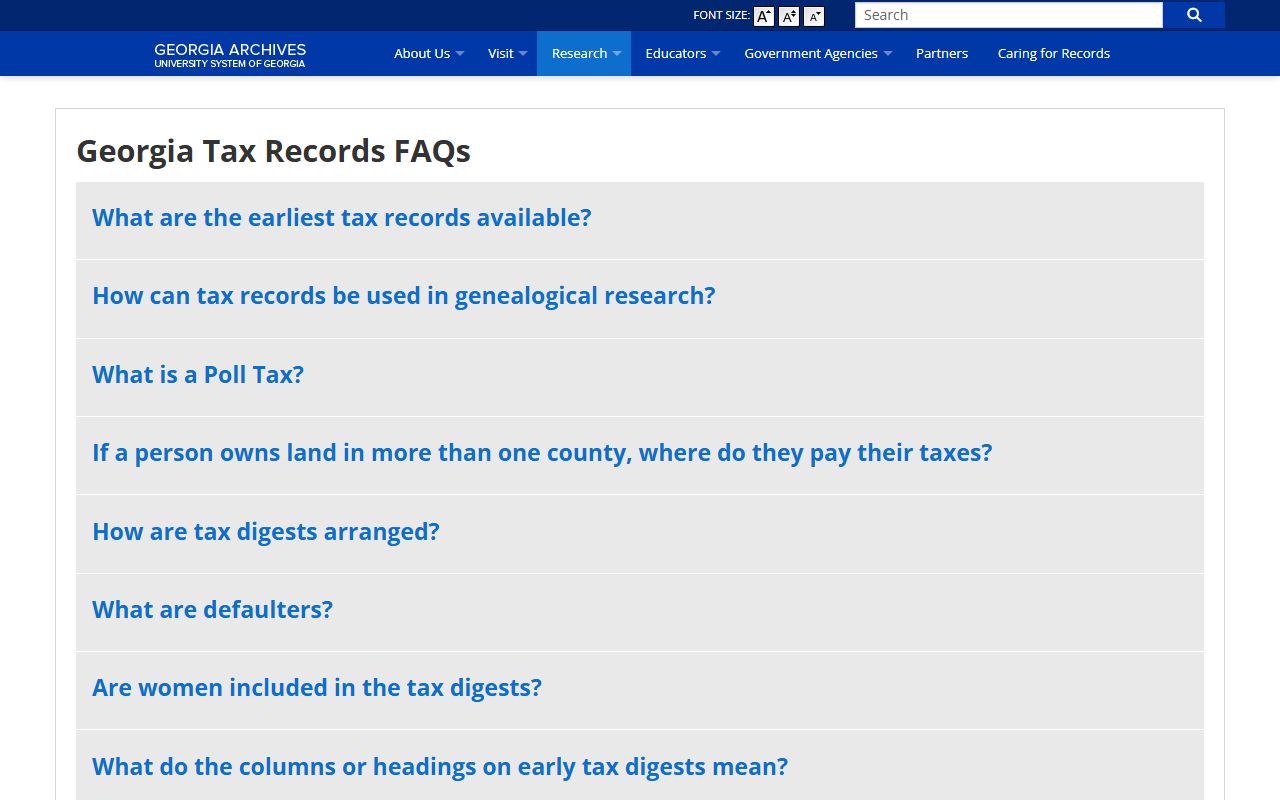
Visit georgiaarchives.org/research/tax_records_faq to learn more about accessing these historical records.
Browse Georgia Property Tax Records by County
Each of Georgia's 159 counties maintains its own property tax records. Select a county below to find local contact information, online search portals, and resources for property tax records in that area.
Property Tax Records in Major Georgia Cities
Property taxes are administered at the county level, but residents of major cities can find localized information here. Select a city below to learn about property tax records in that area.