
Crisp County Property Tax Guide for Homeowners and Buyers
Crisp County lies in south central Georgia. Cordele serves as the county seat. The county is known for its rich farm land. Lake Blackshear draws visitors each year. Property tax records are public here. The Crisp County Tax Assessor values all land and buildings. This office uses fair market standards. Records are easy to find online. The county uses QPublic.net for searches. You can also visit the office in Cordele. Staff will help you with questions.
Crisp County Property Tax Quick Facts
How to Search Crisp County Property Tax Records
Crisp County uses QPublic.net for property searches. This online tool is free to use. Many Georgia counties use this same system. You can search by owner name. Street address works well too. Parcel numbers give exact results. The database is open to all.
Visit qpublic.net/ga/crisp/ to start your search. Type what you know about the property. The site will show matching parcels. Click any result for full details. You will see the assessed value. Land and building values show separate. Sales history may appear for some homes. This data helps you compare values in Crisp County.
The online search meets most needs. You can check your own home value. Buyers can research before making offers. Investors study the market here. Real estate agents use this tool each day. All users access the same records. No login is needed to search.
Cordele is the hub of Crisp County. The tax office sits near the court house. The address is easy to find. Both the Tax Assessor and Tax Commissioner are there. This saves time when you need help from both offices.
Crisp County Tax Assessor Office
The Crisp County Tax Assessor sets values each year. Georgia law requires fair market value. The assessed value equals 40% of market value. The chief appraiser leads the staff. They study sales across the county. Field work happens on a set plan. New buildings get checked as they go up.
Assessment notices go out each spring. These show your value for the next tax year. Read your notice with care. It lists your appeal rights. You have 45 days to file an appeal. The deadline is firm. Late appeals are not heard. You must wait for the next year.
| Office Address |
Crisp County Tax Assessor 210 South 7th Street Cordele, GA 31015 Phone: (229) 276-2635 |
|---|---|
| Hours | Monday - Friday, 8:00 a.m. - 5:00 p.m. |
| Property Search | qpublic.net/ga/crisp/ |
| State Resources | dor.georgia.gov/county-property-tax-facts |
The Tax Assessor office offers many services. Staff explain how values are set. They give sales data from your area. You can get copies of property cards. The office processes homestead forms. These can cut your tax bill. Ask about senior and veteran plans.
For questions about your assessment, call the office. Staff are ready to help. They can guide you through appeals. You may also visit in person. Bring your assessment notice. Write down questions first. This helps you get clear answers.
Crisp County Tax Commissioner Information
The Crisp County Tax Commissioner handles bills and payments. This office mails tax bills to all owners. They take payments and give receipts. The Tax Commissioner tracks late accounts. They hold tax sales when needed. For billing questions, call this office.
Tax bills in Crisp County go out in fall. Most are due by December 20. Check your bill for the exact date. You have 60 days from postmark to pay. After that, interest adds up. The rate follows state law. Pay on time to avoid extra fees.
| Office Address |
Crisp County Tax Commissioner 210 South 7th Street Cordele, GA 31015 |
|---|---|
| Hours | Monday - Friday, 8:00 a.m. - 5:00 p.m. |
| Payment Options | Mail, in person, or online |
| Taxpayer Rights | dor.georgia.gov/property-taxpayers-bill-rights |
Payment options in Crisp County are flexible. You can pay by mail with a check. In-person payments are also taken. Some taxes can be paid online. Contact the office to learn more. Staff will explain each method.
The Tax Commissioner also handles vehicle tags. Many residents visit for both needs. You can renew tags at the same office. The office may get busy at times. Plan ahead to avoid long waits. Check by phone for best times to visit.
Tax sales happen when owners do not pay for years. The Tax Commissioner runs this process. Properties may sell at auction if taxes stay due. The goal is to collect taxes for the county. Most owners pay before this stage. Call early if you need help. Staff can explain payment plans.
How to Appeal Property Assessments in Crisp County
Property owners in Crisp County can appeal assessments. The process starts with your notice. You have 45 days to file. Do not miss this window. Late appeals will not be heard. You must wait for the next tax year.
First, call the Tax Assessor office. Discuss your concerns with staff. Some issues get solved at this stage. If not, file a formal appeal. You can do this in person. Include your property details and reason. Attach supporting papers. Sales of similar homes help. An appraisal is even better.
Appeals in Crisp County go to the Board of Equalization. This panel has local citizens. They hear cases and decide. You can present facts at a hearing. Bring photos and sales data. Be ready to explain your case. The board will send a written choice.
Three appeal options exist in Georgia. The Board of Equalization is most used. Hearing Officers take complex cases. They know property value well. Binding arbitration is the third choice. It gives a faster end. Each option has rules. Learn more at dor.georgia.gov/property-taxpayers-bill-rights.
If your final value drops to 85% or less, you may get costs back. This includes appraisal fees. Keep all appeal records. Take notes at meetings. Georgia law protects your right to fair value. The Crisp County Tax Assessor follows these rules.
Crisp County Homestead Exemptions
Homestead exemptions cut your property tax bill in Crisp County. They remove part of your home value from tax. You must own and live in the home by January 1. The state exemption takes $2,000 off your assessed value. Crisp County may add local exemptions too.
To apply, visit the Tax Assessor office. The deadline is April 1. You apply once only. The exemption renews each year. Bring proof you own and live there. A driver's license and utility bill work well. Make sure your address matches the property.
Seniors may get extra exemptions in Crisp County. Homeowners over 65 can save more. Some get full school tax exemption. Income rules apply. Disabled veterans get special benefits too. Each program has its own rules. Ask which ones fit your case.
The basic homestead exemption applies to all main homes. It is the most common kind. The savings show on your tax bill. You will see a lower amount due. For questions, call (229) 276-2635. Staff will explain the programs. They help you fill out forms.
Cities in Crisp County
Crisp County has two main cities. Cordele is the largest and serves as county seat. Arabi is a smaller town in the county. The Tax Assessor handles all properties in both areas. Tax bills come from the Tax Commissioner. City offices handle local services. County offices handle property taxes.
Rural areas in Crisp County include unincorporated lands near Lake Blackshear. All use the same Crisp County property tax records system for assessments and billing.
Nearby Counties
These counties border Crisp County. If you need property tax records for areas near Crisp, check these counties. Each has its own tax offices.
Additional Crisp County Property Tax Resources
More help is available for Crisp County property owners. The Georgia Department of Revenue has county tax facts online. Visit dor.georgia.gov/county-property-tax-facts to learn more. This site has state-wide tax data. It explains appeal rights and exemptions.
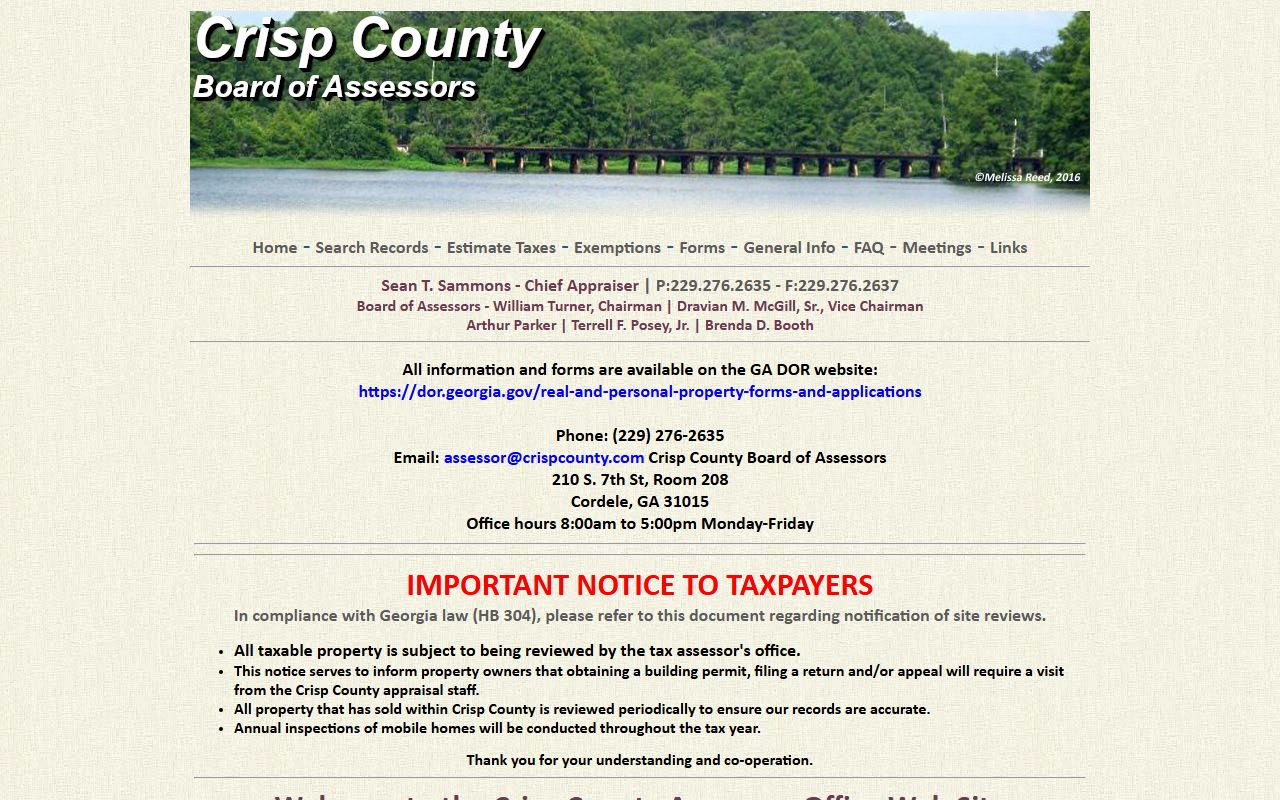
The Crisp County website has forms and FAQs. You can download homestead applications. Appeal forms are available too. The site lists office hours and phone numbers. You can email questions as well. Staff will reply within a few days.
Property tax records are public in Georgia. Anyone can search them. You do not need to own property. This helps buyers research first. It helps sellers check their values. Neighbors can compare assessments. This keeps the system fair for all.