
Troup County Property Tax Records and Assessment Search
Troup County sits in west-central Georgia along the Alabama border. LaGrange serves as the county seat and largest city. The Troup County Tax Assessor values all real and personal property. The Tax Commissioner handles billing and collections. You can search Troup County property tax records online. The county uses QPublic.net for parcel searches. This free system shows assessments and ownership details. Visit the office in LaGrange for in-person help. Staff can answer questions about valuations and exemptions. Records are open to the public under Georgia law.
Troup County Property Tax Quick Facts
How to Search Troup County Property Tax Records
Troup County uses QPublic.net for online property searches. This platform is widely used across Georgia. Many counties in the region rely on the same system. You can search Troup County property tax records by owner name. Address searches work well too. You can also use parcel numbers if you know them. The search tool is free for everyone to use.
Visit qpublic.net/ga/troup/ to begin your search. Enter what you know about the property. The system will display matching results. Click on any parcel for detailed information. You will see the assessed value and land value. Building values are listed separately. Sales history appears for most properties. This helps you understand market trends in Troup County.
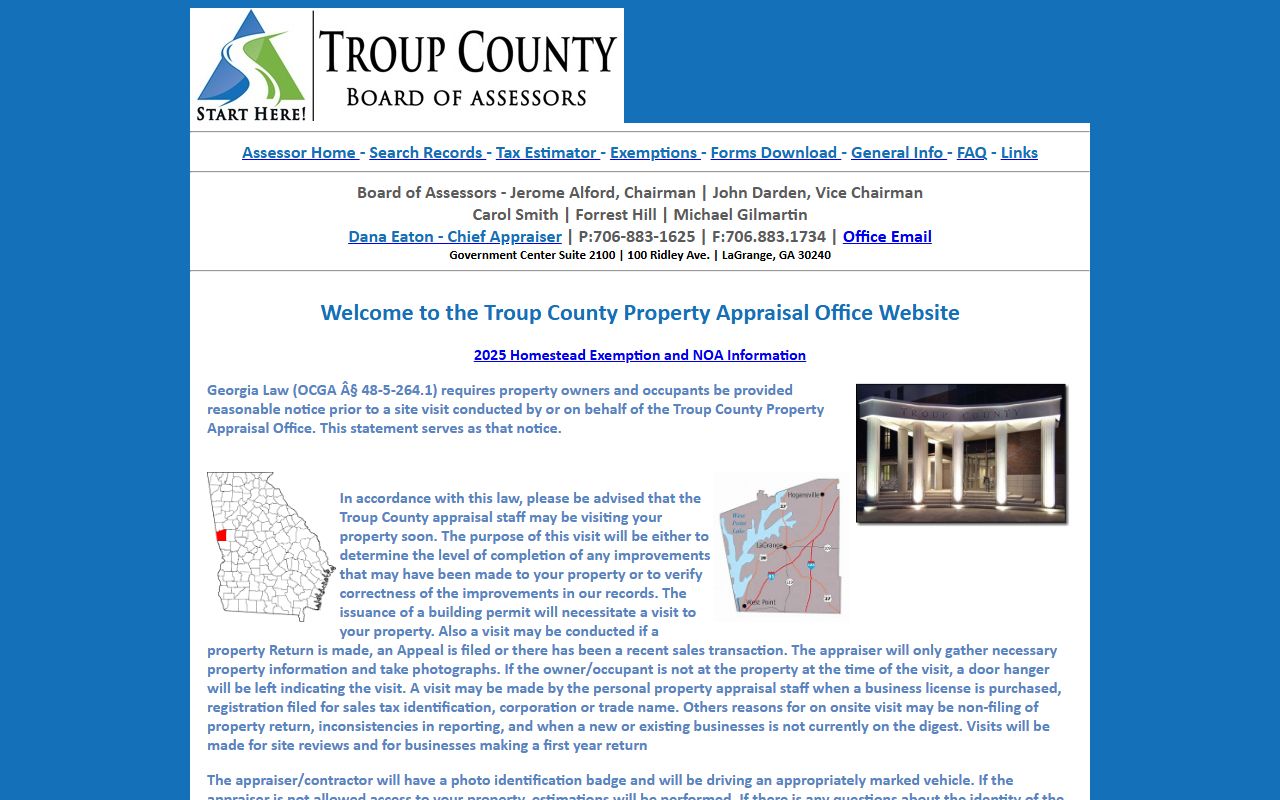
The online search is ideal for quick lookups. Homeowners can check their property values. Buyers research before making offers. Investors study the local market. Real estate professionals use it daily. Attorneys rely on it for title research. Everyone has equal access to these public records.
LaGrange is the center of Troup County government. The tax offices are located downtown. You can find them on Ridley Avenue. The location is convenient from major highways. Both the Tax Assessor and Tax Commissioner share the same government complex. This makes it easy to handle multiple tasks in one visit.
Troup County Tax Assessor Office
The Troup County Tax Assessor determines property values each year. Georgia law requires fair market value assessments. The assessed value equals 40% of fair market value. The chief appraiser oversees the assessment staff. They analyze sales data from throughout the county. Field inspectors visit properties on a regular schedule. New construction receives inspections as it progresses.
Assessment notices are mailed in the spring. These notices show values for the upcoming tax year. Review your notice carefully when it arrives. It contains important information about appeal rights. You have 45 days to file an appeal. This deadline is strict and enforced. Late appeals will not be considered. You must wait until the following year.
| Office Address |
Troup County Tax Assessor 100 Ridley Avenue LaGrange, GA 30240 Phone: (706) 883-1620 |
|---|---|
| Hours | Monday - Friday, 8:00 a.m. - 5:00 p.m. |
| Website | troupcountyga.org |
| Property Search | qpublic.net/ga/troup/ |
The Tax Assessor office provides many helpful services. Staff can explain how values are determined. They offer sales data from your neighborhood. You can request copies of property records. The office processes homestead exemption applications. These exemptions can reduce your tax burden. Ask about special exemptions for seniors and veterans.
For questions about your assessment, contact the office directly. The staff is trained to assist taxpayers. They can walk you through the appeal process. You may also visit in person. Bring your assessment notice and supporting documents. Write down your questions beforehand. This ensures you get all the information you need.
Troup County Tax Commissioner Information
The Troup County Tax Commissioner manages billing and collections. This office mails tax bills to all property owners. They process payments and provide receipts. The Tax Commissioner handles delinquent accounts. They coordinate tax sales when necessary. For questions about your bill, contact this office.
Tax bills in Troup County are typically mailed in the fall. Most bills are due by December 20. Check your specific bill for the exact due date. You have 60 days from the mailing date to pay. Interest accrues after this deadline. The interest rate is set by state law. Pay on time to avoid additional charges.
| Office Address |
Troup County Tax Commissioner 100 Ridley Avenue LaGrange, GA 30240 Phone: (706) 883-1620 |
|---|---|
| Hours | Monday - Friday, 8:00 a.m. - 5:00 p.m. |
| Website | troupcountyga.org |
| Payment Options | Online, mail, or in person |
Troup County offers multiple ways to pay your taxes. Online payment accepts credit cards and e-checks. Credit card payments include a convenience fee. E-check payments typically have no added fee. You can also mail a check or money order. In-person payments are accepted at the Ridley Avenue office.
The Tax Commissioner also manages motor vehicle tag renewals. Many residents handle both tax and tag business together. Tag renewals can be done online or in person. The office experiences high volume during peak periods. Plan your visit accordingly to minimize wait times. Check the county website for current office information.
Tax sales occur when property taxes remain unpaid for extended periods. The Tax Commissioner oversees this process. Properties may be sold at auction to recover taxes. Most owners resolve their accounts before auction. Contact the office early if you face payment difficulties. Staff can explain available payment options.
How to Appeal Property Assessments in Troup County
Property owners in Troup County have the right to appeal assessments. The process begins when you receive your notice. You have 45 days to file an appeal. Do not miss this important deadline. Late appeals will not be accepted. You must wait for the next assessment cycle to challenge your value.
Start by contacting the Troup County Tax Assessor office. Discuss your concerns with staff members. Some issues can be resolved informally at this stage. If not satisfied, file a formal appeal. You can submit appeals online or in person. Include your property information and reason for appeal. Attach supporting documentation to strengthen your case. Sales of comparable properties are helpful. An independent appraisal provides strong evidence.
Troup County appeals are heard by the Board of Equalization. This board consists of local residents. They review cases and make determinations. You can present evidence at a scheduled hearing. Bring photographs and sales data. Be prepared to explain why your assessment is incorrect. The board will issue a written decision after review.
Georgia offers three appeal options for property owners. The Board of Equalization is the standard choice. Hearing Officers handle more complex valuation cases. They have specialized training in property assessment. Binding arbitration provides a quicker resolution path. Each option has specific procedures to follow. Learn more at dor.georgia.gov/property-taxpayers-bill-rights.
If your final assessed value is reduced to 85% or less of the original, you may recover costs. This includes appraisal fees and reasonable legal expenses. Keep detailed records throughout your appeal. Take notes during all meetings. Georgia law protects your right to fair assessment. The Troup County Tax Assessor follows these statutory requirements.
Troup County Homestead Exemptions
Homestead exemptions lower your property tax bill in Troup County. They remove a portion of your home's value from taxation. You must own and occupy the home as your primary residence as of January 1. The standard state exemption reduces your assessed value by $2,000. Troup County may offer additional local exemptions.
To apply, visit the Troup County Tax Assessor office. The application deadline is April 1 each year. You only need to apply once for most exemptions. The exemption automatically renews in subsequent years. Bring proof of ownership and residency documentation. A driver's license and utility bill are usually sufficient. Ensure your address matches the property address.
Senior citizens may qualify for enhanced exemptions in Troup County. Homeowners aged 65 and older can receive additional savings. Some may qualify for complete school tax exemption. Income limits apply to certain programs. Disabled veterans are eligible for special benefits. Each exemption program has unique requirements. Ask the Tax Assessor which programs you may qualify for.
The basic homestead exemption applies to all qualifying primary residences. It is the most commonly claimed exemption. The savings appear directly on your tax bill. You will see a reduced amount due. For questions about exemptions, call (706) 883-1620. Staff members can explain available programs. They will assist you with application forms.
Cities in Troup County
Troup County includes several incorporated municipalities. Each city maintains its own local government and services. All properties within these cities are assessed by the Troup County Tax Assessor. Tax bills are issued by the Troup County Tax Commissioner. Cities handle zoning, building permits, and local ordinances. Property taxation remains a county function.
Other communities in Troup County include Mountville and rural unincorporated areas. All properties use the same Troup County property tax records system for assessments and billing.
Nearby Counties
These counties border Troup County. If you need property tax records for areas near Troup County, check these neighboring counties. Each operates its own tax assessor and commissioner offices.
Additional Troup County Property Tax Resources
Additional resources are available for Troup County property owners. The Georgia Department of Revenue provides county tax facts online. Visit dor.georgia.gov/county-property-tax-facts for more information. This website contains statewide tax data. It explains appeal rights and exemption requirements.
The Troup County government website offers forms and frequently asked questions. You can download homestead exemption applications. Appeal forms are also available online. The site lists office hours and contact information. You can submit questions via email. Staff typically respond within a few business days.
Property tax records are public information in Georgia. Anyone may search them. Property ownership is not required to access records. This transparency helps buyers make informed decisions. Sellers can verify their property values. Residents can compare assessments with neighbors. This openness ensures fairness for all taxpayers.